
Slopes That Hold Soil During Storms
Erosion Control Services in Manson for properties with exposed slopes losing topsoil to runoff
Bare slopes shed topsoil with every rain event, creating gullies that deepen over time and sending sediment into low areas, driveways, and waterways. Erosion control using hydroseeding, soil stabilization, and slope treatments stops this loss by establishing root systems that bind soil particles and absorb runoff energy before it gains enough velocity to move earth. Skram Hydro Seeding and Land Management applies erosion control services in Manson where grading, construction, or vegetation removal has left slopes vulnerable to washout.
Hydroseeding applies a slurry of seed, mulch, and tackifier that adheres to slopes and germinates into dense ground cover, while soil stabilization treatments use additional binding agents to hold particles in place during the establishment period. The process controls runoff velocity, reduces sediment movement, and protects slope integrity until vegetation matures enough to prevent erosion independently.
Schedule an on-site assessment to evaluate slope angles, soil type, and drainage patterns affecting erosion severity.
What You Notice Once Erosion Control Is Established
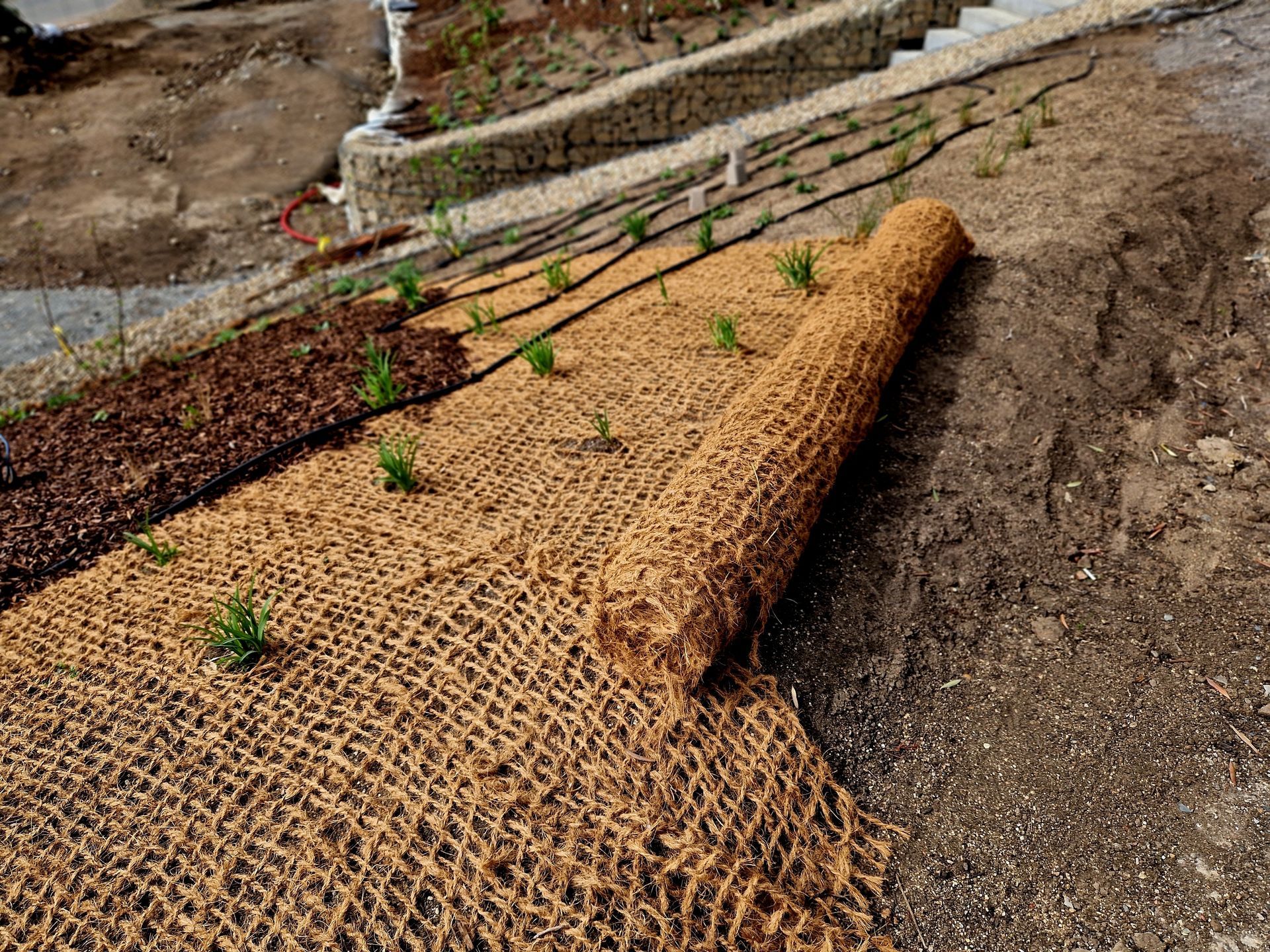
Erosion control work involves spraying a hydraulically applied mixture of grass seed, wood or paper mulch, and organic tackifiers that bond the material to exposed soil surfaces, even on slopes too steep for conventional seeding. Mulch fibers create a protective mat that absorbs raindrop impact and slows sheet flow, while tackifiers hold everything in place until seeds germinate and root systems begin anchoring soil layers. Slope stabilization on particularly vulnerable grades may include erosion control blankets or additional mulch applications to reinforce coverage during heavy rainfall common to North Carolina spring and summer weather patterns.
After hydroseeding establishes, you will see uniform green coverage instead of bare soil, and rain will soak into the slope rather than running off in muddy streams. Gullies stop widening, sediment no longer accumulates at the slope base, and the ground remains stable underfoot instead of sloughing away when walked on. Treated slopes shed water without shedding soil, and vegetation density increases over the first growing season as roots interlock to form permanent erosion resistance.
Erosion control does not eliminate the need for proper grading or drainage structures if slopes exceed stable angles or if concentrated water flow requires culverts or swales. Hydroseeding and soil stabilization address surface erosion caused by rain impact and sheet flow, not structural slope failures or subsurface water issues that require engineered solutions.
Answers to Frequent Service Questions
Erosion control involves biological and mechanical processes that depend on timing, weather, and slope conditions, so understanding these factors helps you plan effective treatments.
What is hydroseeding and how does it control erosion?
Hydroseeding sprays a mixture of grass seed, mulch, fertilizer, and tackifier onto exposed soil in a single application, creating a protective layer that holds seed in place, retains moisture for germination, and absorbs rainfall energy that would otherwise dislodge soil particles and create runoff channels.
How long does it take for erosion control to become effective?
Initial protection begins immediately as mulch absorbs rain impact, but full erosion resistance develops over four to eight weeks as grass roots establish and interlock, with effectiveness increasing throughout the first growing season as vegetation matures and root density increases.
When is the best time to apply erosion control in Manson?
Spring and early fall provide optimal germination conditions in North Carolina, with adequate moisture and moderate temperatures supporting fast establishment, though hydroseeding can be applied year-round when supplemented with mulch blankets or additional tackifier for winter dormancy protection.
What types of slopes require erosion control?
Any slope steeper than 3:1 (three feet horizontal for every foot of vertical rise) is vulnerable to erosion after vegetation is removed, with steeper grades and longer slope lengths increasing runoff velocity and requiring more aggressive stabilization treatments to prevent gully formation.
How does erosion control differ from regular lawn seeding?
Erosion control uses higher mulch ratios, specialized tackifiers, and seed blends selected for fast germination and deep rooting rather than appearance, prioritizing soil stabilization over turf quality and applied hydraulically to adhere to slopes where broadcast seeding would wash away.
Skram Hydro Seeding and Land Management stabilizes exposed slopes so rain builds healthy vegetation instead of carving gullies and washing soil into unwanted areas. Contact us to review slope conditions and determine the appropriate erosion control approach for your property.